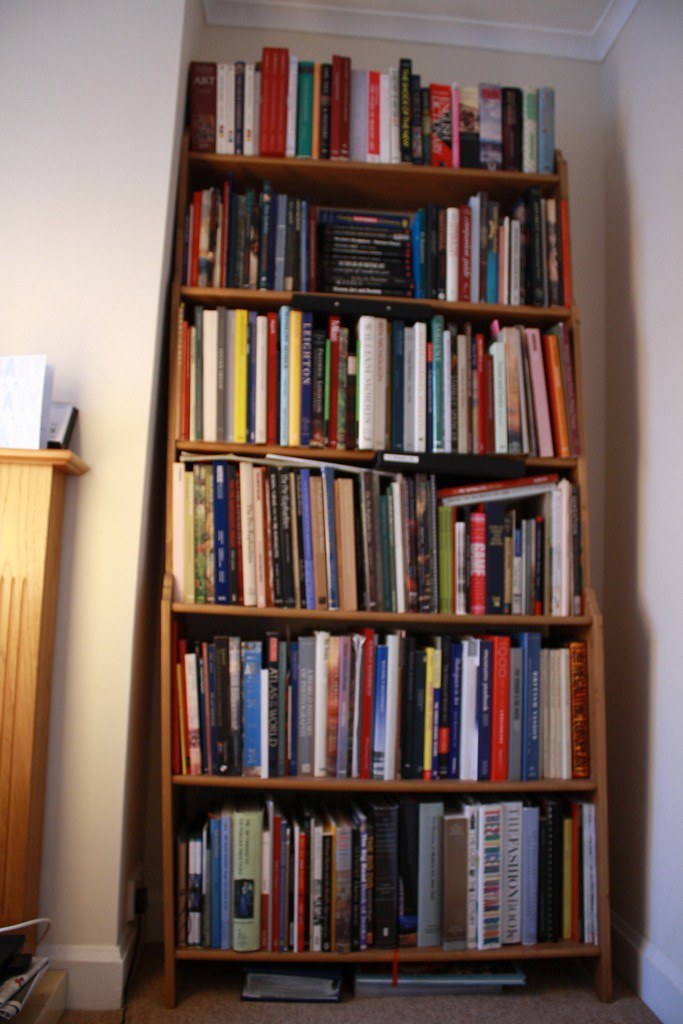
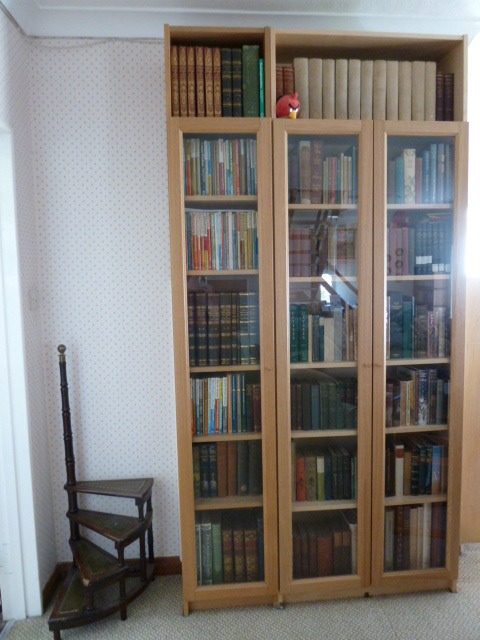
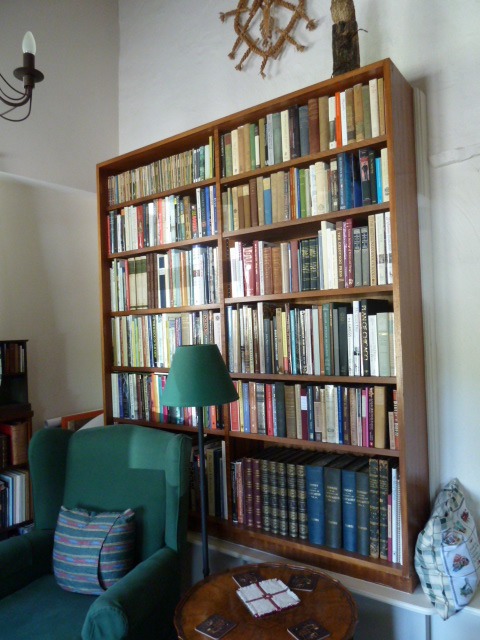
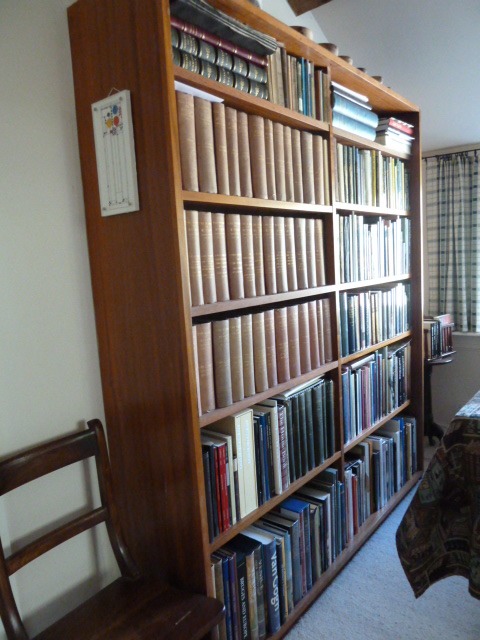
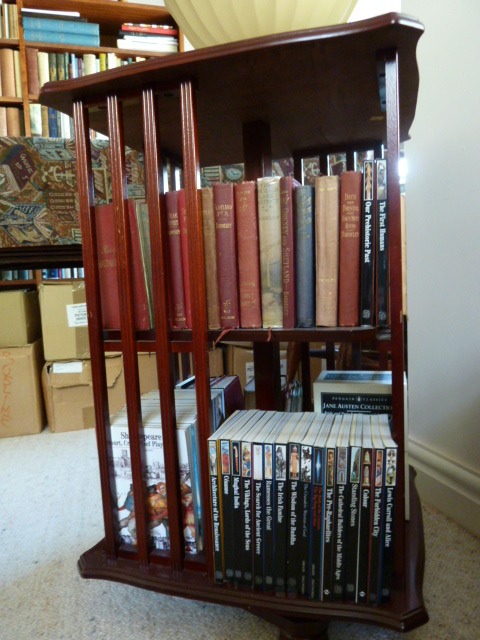
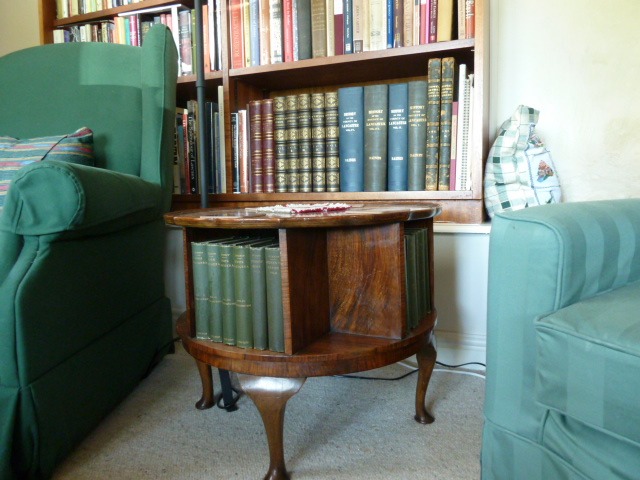
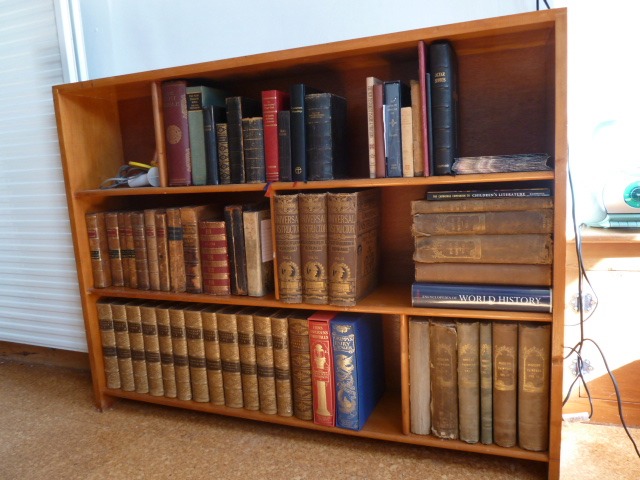
My last entry focused on the IKEA bookcase which leans in an inebriated fashion in our living room. A month or so ago we found ourselves buying a new bookcase – this time, and in order to avoid paying the extortionate delivery costs, from Argos. The bookcase is handsome enough and, at only £19.99, pretty good value. The purchase became necessary owing to the number of books I had accumulated since discovering I was pregnant last July, and the books I had bought since the birth of my beautiful son, Tristan.

The first of this three part post will, I hope, offer some guidance to anyone daunted by the number of books about pregnancy, while the second part – which is much more fun – will be about the beginnings of my baby book library. Having had very little sleep over the past five months, the final part will survey the books which, all with the compulsory picture of a perfectly contented baby in a dream-like state on the cover, attempt (to give it away from the outset, I would say unsuccessfully) to get your child to sleep through the night.

The first of this three part post will, I hope, offer some guidance to anyone daunted by the number of books about pregnancy, while the second part – which is much more fun – will be about the beginnings of my baby book library. Having had very little sleep over the past five months, the final part will survey the books which, all with the compulsory picture of a perfectly contented baby in a dream-like state on the cover, attempt (to give it away from the outset, I would say unsuccessfully) to get your child to sleep through the night.
Part One: Nine Women Can’t Make a Baby in One Month: Books about Pregnancy
I am sure I wasn’t alone in desperately searching for the perfect book to get me through my pregnancy and, within a few days of seeing the two red lines appear on my pregnancy test, I was off shopping. I didn’t even know where such books could be found in Waterstone’s and, found myself wandering round aimlessly until I stumbled across bookshelf after bookshelf tucked away in the Childrens’ Department.
Of course books play a secondary role compared to the internet and, despite the doctor telling me on my very first appointment not to rely on the web to diagnose all the pains, sores, aches and nausea which I would inevitably experience, I found that I couldn’t help myself. Google’s search engine dealt more than adequately with my requests for information, and I rarely even had to type in the word ‘pregnancy’ as from merely entering ‘8 weeks …’ or ‘pain on left side …’ Google assumed that I must be wanting to know what on earth the faint red line was that was slowly working its way from my belly button in all directions, or wondering why for the first time in my entire life I didn’t feel like eating a custard cream.
Anyway, back to books. I didn’t find the book I wanted on that first visit, but my problem was solved when I found my husband had ordered ‘What to Expect When You’re Expecting’ from Amazon and we discovered, to our absolute delight, that Tristan was already the size of a blueberry. In the weeks that followed and, as a result of this book close to hand, we could happily browse Sainsbury’s and pick up the very fruit or vegetable that the growing foetus could be compared to, and place it next to my tummy. Even when he was the size of a melon and shopping trips for me became more of an ordeal than a pleasure, we both squealed with delight when we found the comparable food (n.b. At 7 months, Tristan is currently not even half the weight of the world’s largest sweet potato which weighed in at 24lbs.)
The book had other uses too and, for each symptom that appeared, I could look through the books’ index and find out that what I was experiencing was perfectly normal or, if it wasn’t, I would resort to the internet again and discover at least a dozen discussion sites devoted to the subject. So ‘What to Expect …’ was never too far away. The only trouble with the book and, being an art historian you can perhaps sympathise with me, was that there weren’t any pictures at all. One of the most enjoyable things about being pregnant (and there were very few in my case) was trying to imagine the baby growing inside me. This was when Anne Deans’ The Pregnancy Bible came in handy. Lent to me by a friend, this tome had colour photographs throughout of, not only the rapidly expanding child with alien features, but also of a tummy which, until the final 10 weeks, was significantly more impressive than mine.
Still the very best book was undoubtedly The Best Friends’ Guide to Pregnancy by Vicki Lovine which my sister had sworn by. I didn’t actually care very much for this book until the final month when I read it more or less from cover to cover. Because of Lovine I decided not to get my hair cut (she advises against attempting a new look during pregnancy as you’re doomed to looking rubbish most of the time anyway) and, in those final few days when I was literally pulling out strands of my unkempt hair, it made us chuckle as the author described the moment when I would wake in the middle of the night and calmly announce ‘darling, it’s time’ (actually this isn’t far off what happened as, unlike in Eastenders when the actresses crumple up in the middle of the square in agony when labour starts, I only had mild cramps at the outset). She describes the process of childbirth fairly candidly (I’m afraid that I didn’t have much time for Ina May’s Guide to Childbirth in which she basically says that, with the right techniques, all you’ll feed in childbirth is a slight tingling effect as the baby pops out).
In conclusion I would say that the very best guide to pregnancy, and the one that it’s worth having on your bedside table in case you can’t make it out of bed in the morning, is The Pregnancy Book which is published by the NHS, and should be given to you by your midwife on your first visit. Although the photo of a woman with stretch marks was a bit horrifying, the book tells you everything that will or could happen and, best of all, is completely free. It’s also useful for listing up to date information about all the benefits that you can claim, and has a chart detailing what to expect during each check-up.