Wednesday, 23 February 2011

The Pleasure of Long Books


The number of books that can be read in the average lifetime is necessarily limited; the urge to collect more books continues undiminished for many years. Therefore choices have to be made as to which books to read now and which can be safely deferred for a few years longer. This choice becomes particularly acute when the books in question are long, and by long I mean of the order of 1,000 pages or more.

However, the rewards of total immersion in a long book can be incalculable, as you are sucked into the world of its characters and the book you are reading seems to be the only book you have ever read. I want to write about several such books that have made a deep impression on me and to indicate others on the shelves as yet unread.

"War and Peace" has become almost a catch-phrase or generic name for books that over-awe by their length and reputation. I bought my copy in W H Smith in Chester in the summer holiday after completing my first degree. It seemed a good use of time before commencing further studies leading to a PhD. And so it was; from the very beginning I was totally absorbed in the events of the time and the lives of the characters, Pierre, Natasha, Nicholas, Andre, Sonya and the rest, so that when the final page was turned there was a genuine feeling of loss. I have read the book twice since that first reading, in the same Louise and Aylmer Maude translation, but it is that first encounter with Tolstoy's brilliance that has left the permanent impression.
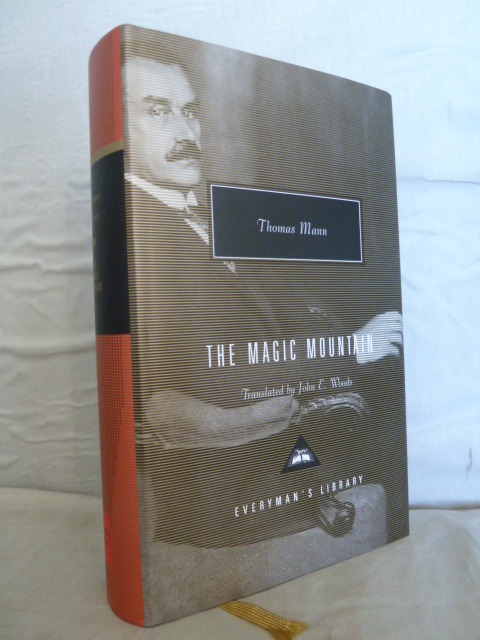


That was some 40 years ago, but it was last early last year that I finally got round to Thomas Mann's "The Magic Mountain". I expected this to be a "difficult" book, but I was wrong. For a few weeks I lived with Hans Castorp in that sanitorium, high in the Alps. With Hans I took long walks and rest cures, learnt how to wrap myself in a blanket and followed him to dinner, hoping to avoid the 'bad Russian' table. With Hans, I was a fascinated, if somewhat perplexed, listener to the interminable debates between the Jesuit Naphta and the rationalist Settembrini, that are only brought to a conclusion when the former blows his own brains out in their duel. There was a sadness when I finally left the sanitorium with Hans to face an uncertain future as the Great War took its toll.
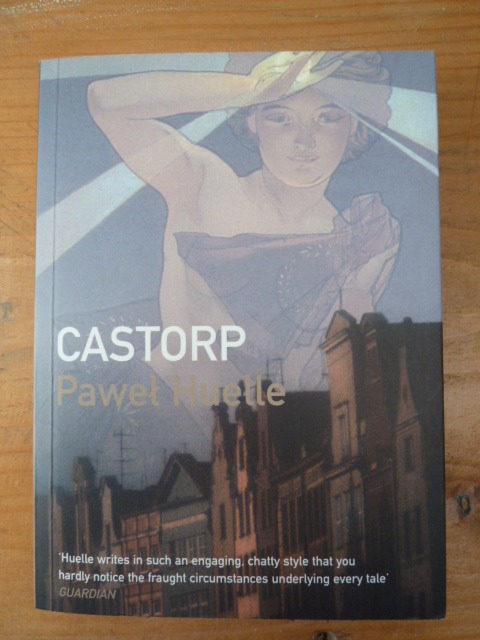


Early last year we were in Cracow and in the excellent American Bookstore there I found a copy of Pawel Huell's "Castorp". This is a short book, but is a sort of prequel to "The Magic Mountain", as it tells the story of Hans Castorp in Gdansk, where he was studying marine engineering, a period briefly alluded to in Thomas Mann's book. This book is so well written that for a short time I was taken back to Castorp's world.
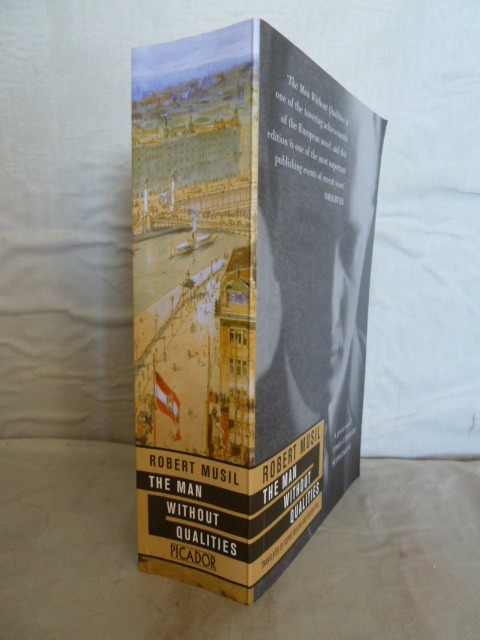


Another central European classic is Robert Musil's "The Man Without Qualities". It was its marvellous opening line - 'A barometric low hung over the Atlantic' - that attracted me to this book when I picked it off the shelf in the sadly now long gone Borders bookstore in Preston. The setting is Vienna a year or so before the outbreak of the First World War and, with the eponymous hero, Ulrich, I attended the endless receptions and meetings to plan the celebrations to mark the 70th anniversary of the accession of the emperor Franz Josef. It is all so pointless, which I suppose is the point of the book.
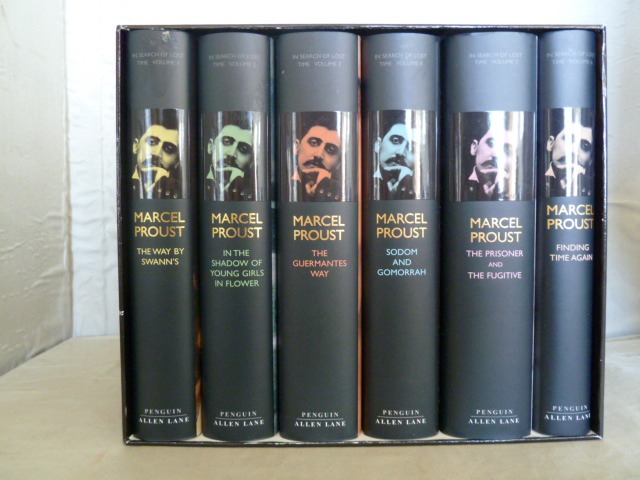


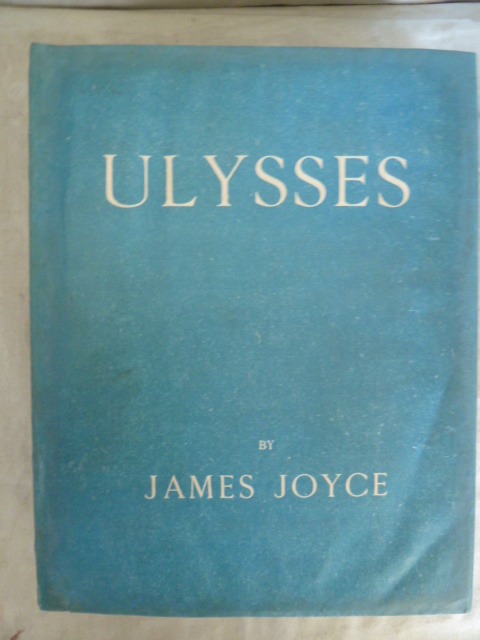
Proust's "In Search of Lost Time" is really several books, but it is better read as one long work, a task I completed one summer. By the end I felt I knew Swann better than those in whose company he then mixed. Time passes in these books; by contrast the action of James Joyces' "Ulysses" takes place in but a single day, but what a day! From the outside perhaps not eventful, but from the perspective of Leopold Bloom a day packed with incident and adventure, best experienced by turning up in Dublin on Bloomsday and just going with the flow.


"Gone with the Wind", "Les Miserables", "Middlemarch", the list could go on, but it is now time to pay homage to those long books as yet unread on our shelves. There they perch, like 'Angry Birds', waiting to sink their claws into me should I be so reckless as to disturb their slumber


A quick scan of the paperback shelves reveals the following:

"Infinite Jest", by David Foster Wallace (for debunking the American Dream);
"Atlas Shrugged", by Ayn Rand (for learning about Objectivism);
"Life and Fate", by Vasili Grossman, set in war-time Stalingrad (not much fun there);
"The Count of Monte Cristo" (for when I am falsely accused, whilst planning my daring escape from prison).
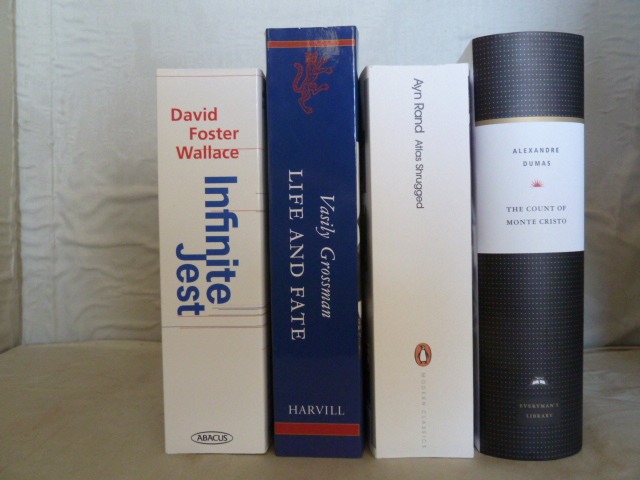


There they are, some 5,000 pages awaiting my attention, but first I will read some haiku.


- Posted using BlogPress from my iPad

Sunday, 13 February 2011

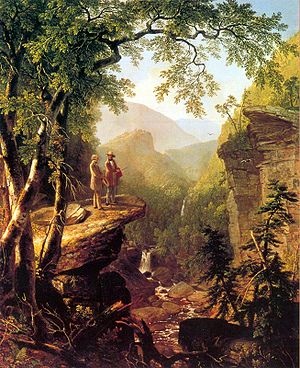
In Search of the Picturesque with Thomas West, Part 1: In Which the Particulars of the Search are Defined and its Method of Execution Described


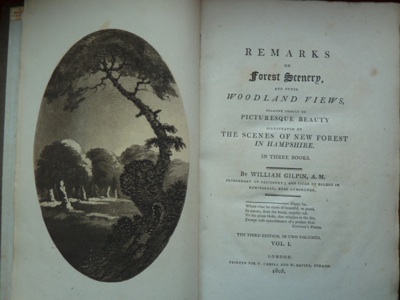
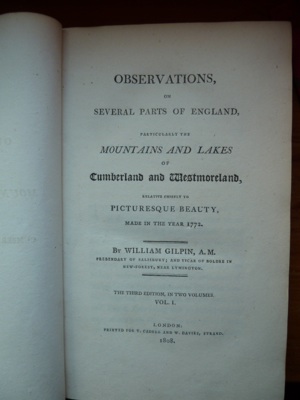
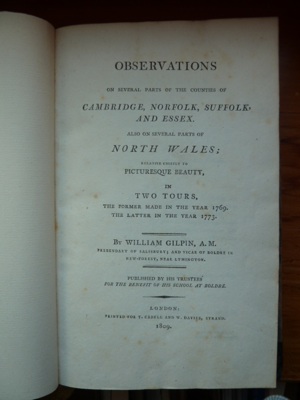
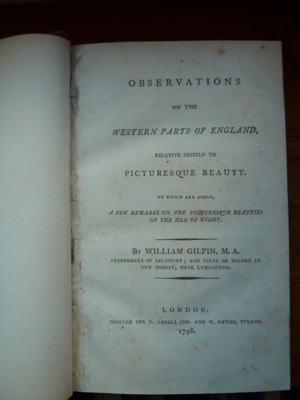
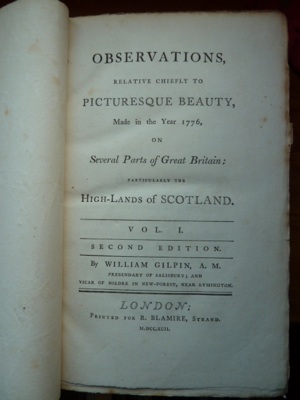
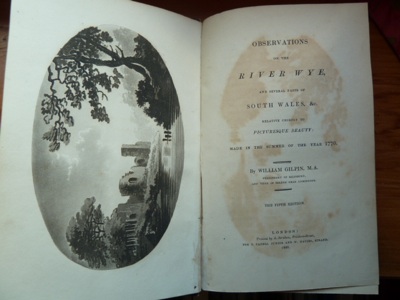
Amongst the books in our library is a small collection of works dating mainly from the end of the 18th century, which prescribe (to discerning tourists) where to go and what to see on arrival, in order for a proper appreciation to be had of those aspects of the natural scenery that constitute its most sublime and picturesque features.

We are talking here of the romantic period, when sensiblities had been heightened by Gothic novels set in crumbling castles, by lyrical ballads extolling the divinity of nature and by Byronic heroes exploring far away lands in cantos spanning many volumes. There was also a leisured class eager to satiate this heightened sensibility by exposure to the best that nature had to offer.


It may seem strange that appreciation of landscape had to be taught, but that is exactly what happened, through the works, in particular, of Uvedale Price and William Gilpin, the much travelled Vicar of Boldre in Hampshire. The former wrote "Essay on the Picturesque, as Compared with the Sublime and the Beautiful" (1794), while the latter's principal theories were summarised in "Three Essays: on Picturesque Beauty; on Picturesque Travel; and on Sketching Landscape" (1792).


Prior to this, Gilpin had made a series of tours across Britain, interpreting the scenery and pointing out those elements of the landscape that most typified the picturesque.


Under Gilpin's tutelage, our attention is drawn to those features that are essential to a really good landscape, such as stunted trees, romantic ruins and contracted valleys. The paintings of Salvator Rosa are held up as prime examples of how art can improve upon nature and under Gilpin's influence landscape artists of the time were encouraged to adjust the view to better fit the ideal.


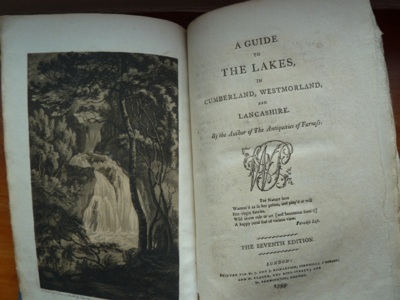
So much that is picturesque, so little time! But help is, fortunately, at hand. Recognising that the already over-burdened leisure classes would not have the time to actually read Gilpin and plan their own tours of the picturesque, Thomas West did it for them! In his classic "Guide to the Lakes", which ran through many editions between 1778 and 1821, West identified 'Stations', from which the views combined the best elements of picturesque landscape and at which the aesthetic sensibilities of the tourists would be most heightened.


So, all the traveller had to do was arrive at a conveniently sited Thomas West station and look at the view, confident that however hard he tried, he would not find one finer. To make it even easier, buildings were erected at some of the stations, so that the intrepid tourist would not suffer the indignity of getting wet whilst communing with savage nature.

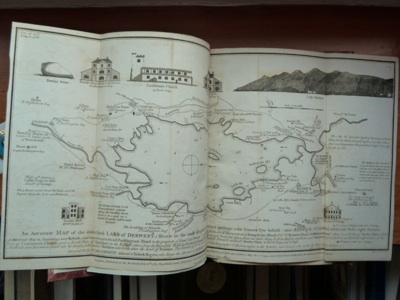
Recognising the commercial possibilities of all of this, the enterprising owner of the Keswick Museum, Peter Crosthwaite, in 1794 published a set of maps that could be purchased as a companion to Thomas West's guide. These maps identified West's stations and, for good measure, Crosthwaite added some of his own.


The maps were embellished with engravings of some of the principal features that should be noted, just in case our romantic tourists had still missed the point. I trust that, following a careful read of Thomas West our diligent travellers noted also the progression from 'the delicate touches of Claude, verified on Coniston lake, to the noble features of Poussin, exhibited on Windermere-water; and from these, to the stupendous, romantic ideas of Salvator Rosa, realized on the lake of Derwent'.

Moving on some 200 years, some of the views from West's stations are apparently now obstructed by trees. However, our modern day quest will be to get as close as we can to each station, so that, with Thomas West's words to hand we can share the experience of the picturesque with those intrepid eighteenth century travellers.

We are helped in this quest by the new science of geocaching, since a fellow cacher called 'flipflopnick' has obligingly worked out the co-ordinates of the stations and made them available on the geocaching web-site. So we will not need a local guide, just a GPS.

Our search in quest of the picturesque in accordance with the above method will be described in future postings.


- Posted using BlogPress from my iPad

Thursday, 27 January 2011

And So To Venice


It was in the Spring of 1981 that I spent my first week in Venice, in the company of my wife, our children and my wife's parents. Since then we have made several more visits and I have progressively fallen ever deeper under the spell of this most beautiful and mysterious of cities.

Many have written on Venice, its lagoon, its art and, perhaps most of all, its architecture. Many are the stories woven around its canals and calles. It is therefore an impossible task to acquire anything approaching a representative Venetian library; however over the period since our first visit, as if by a process of osmosis, significant books on Venice have filtered onto our shelves.


Following our initial visit, the first title I sought out was John Ruskin's monumental "Stones of Venice" and it was in the excellent Bay Bookshop at Colwyn Bay that I found a 3 volume set in the distinctive original boards, for the, then, very reasonable price of £15. It was when I had taken the set back to the car that I found this was actually the autographed edition, with each Volume 1 signed by Ruskin. "Stones of Venice" is an essential first step on the way towards a Venice collection, for surely no other writer of such brilliance has ever subjected the art and architecture of a single city to such forensic examination (or subjected his wife, the lonely Effie, to such strange continental holidays). Armed with Ruskin, the great gothic buildings acquire new significance, as survivals from an age of wonderful craftsmanship married to religious faith. Though I must confess that, unlike Ruskin, I think Venice enhanced by the magnificent Renaissance architecture, that Ruskin saw as evidence of its decline. If all you read in this wonderful work is the chapter on the Nature of Gothic, then you have read the defining statement that became the well-spring for much of William Morris's philosophy and the Gothic Revival.


Since Ruskin, many have summarised, criticised and augmented his great work; to mention a few - Jan Morris, Sarah Quill and Robert Hewison. The latter's recent "Ruskin on Venice" is perhaps the final statement needed. I must, however, also mention the beautifully produced "Bricks of Venice" by Peter Harris, published by the Old School Press, Bath in 2005 in a limited edition of 150 copies. This book studies the brick work of Venice in the gothic period and contains a text volume and a set of separate sheets of coloured illustrations, all housed in a slipcase.


Of guides to Venice there are many; on our first visit we followed the Blue Guide and this remains the only book I consider essential to have to hand. This now has a recently published companion - a Blue GuideLiterary Companion to Venice. J G Links's "Venice for Pleasure" is also excellent and the illustrations in the Eyewitness and Everyman Guides make these worth adding to the collection.


There are many companions to Venice, summarising its history and topography; perhaps most notably James Morris's "Venice", the introductory paragraphs of which are justly praised for their evocation of the first sight of Venice as you approach from the lagoon.


As to history, I will name only three books I find on our shelves; the earliest is Mrs Oliphant's "Makers of Venice", which contains much detail of the lives of the doges and other historical and artistic information. It appears in various editions and is well illustrated with portraits and topographical scenes. Next is F Marion Crawford's "Gleanings from Venetian History", beautifully illustrated by Joseph Pennell, one of the many artists associated with Venice. Both of these are lovely books in which to browse, but the key history to read is John Julius Norwich's "History of Venice", a captivating work, which is unlikely to be surpassed.


Of art and literature, there are riches abundant. Venice's churches and galleries are enriched by works by Titian, Tintoretto, Carpaccio and Tiepolo and many are the glossy art books that reproduce their masterpieces, for example the massive two volume set "Venice Art and Architecture", published by Koneman in a slip case.


Ruskin fell under the spell of the Carpaccio cycles - that of St George in the Scuola Grande di San Giorgio Degli Schiavoni and that of St Ursula in the Accademia and there are separate studies of these works and of Ruskin's infatuation with St Ursula, who he identified with his lost love Rose La Touche. Two books tell the story of how on Christmas Day, 1876, Ruskin wandered the streets of Venice, observing signs left by Ursula/Rose. The definitive study is Van Akin Burd's "Christmas Story", while "Ruskin's Rose: a Venetian Love Story", by Mima Balia and Michelle Lovric is a beautifully produced re-telling of the story of Ruskin's obsession.


On a recent trip to Venice, we followed the route Ruskin took on that grey Christmas Day, from the Piazza, up the Merceria to the lonely area of the Abbazia della Misericorda and along the Fondamente Nuove, looking across to the cemetery island of San Michele, and back to the Carpaccios in Scuola Degli Schiavoni.

Many books contain studies of great artists who have worked in Venice, for example Ian Warrell's "Turner and Venice" and Alastair Grieve's "Whistler's Venice".


The great views of the 18th century by artists such as Canaletto and Guardi are well represented in Filippo Pedrocco's "Visions of Venice". For an account of the development of Venetian architecture, I would turn to Deborah Howard's "Architectural History of Venice".


Of all cities, few have so inspired writers as Venice. A very good survey, "Venice Desired" by Tony Tanner provides a summary of how Venice has affected the writings of, amongst others, Byron, Henry James, Marcel Proust and Ezra Pound. To this list we could add Thomas Mann, whose "Death in Venice" captures something of the melancholy that pervades Venice at certain times and seasons, when mists roll across the lagoon and the layers of history weigh heavy on this fragile city by the sea.

On the lighter side we have Henry James' "The Aspern Papers", concerning attempts to inveigle a collection of literary letters out of the ladies living in a crumbling palazzo, and Sally Vickers' "Miss Garnet's Angel", set around the church of Angelo Raffaele. I like the quote from Ruskin that prefaces this story - 'If some people really see angels, where others see empty space, let them paint the angels ....' We should be eternally grateful that so many have indeed seen the angels in Venice and have shared their visions with us.


Speaking of angels, mention must be made of John Berendt's "City of Falling Angels", which follows the investigations into the fire that badly damaged La Fenice in 1996. The Opera House is now once more restored.

Our last visit to Venice coincided with the Architecture Exhibition at the 2010 Biennale. Here in the British Pavilion on the first day of the exhibition, we could see Ruskin's Venetian Notebooks, on loan from Lancaster University. In these notebooks Ruskin used to write the word 'Done' on pages, from which the drawings or records he had made had been transcribed to the next level. Facsimiles of these pages, together with more recent photographs, are provided in Wolfgang Scheppe's "Done Book". I have, however, the feeling that we can never 'do' Venice. There will always be unvisited campos, uncrossed bridges and calles less travelled that lead us deeper into the secret places of the city.


Finally, tribute must be paid to Aldus Manutius, the greatest of Venetian printers, who arrived in Venice in 1490 and established the Aldine Press. At this press he produced the first small format editions of the classics, inventing also italic type. These Aldine Press octavo volumes became the world's first mass-distributed books and hence are the earliest precursors of today's best sellers.


- Posted using BlogPress from my iPad
Monday, 17 January 2011

Macabre Readings


From the Grammar School, across the River Dee in Chester, to the bus station on Delamere Street was a walk of about a mile - across the Old Dee Bridge, up the hill of Bridge Street, over the cross and up Northgate Street to the bus station. I had exactly 30 minutes to complete this journey after school finished, just allowing time for at least one book-stop along the way. I had at this time developed a liking for short stories of the more macabre kind, having grown up on a diet of the more traditional ghost stories.

There were two choices. A passage to the left of the imposing front of Chester Town Hall led past the bar once run by the legendary Everton Centre-Forward, Dixie Dean, into Chester's indoor market. Here was located a 4-sided stall run by one Mark Bloom, who had the enviable knack of knowing exactly what comics and cheap paperbacks would appeal to an 11-year old, with a penchant for horror. The second option was a short diversion down Watergate Street to Thompson's, a newsagent with a surprisingly good stock of cheap paperbacks with sensational covers, more or less opposite the impressive God's Providence House. It was from these two non-traditional sources of books that during the early 1960's I built up a small, but valuable (to me, at least) collection of paperbacks containing ghost and horror stories, in the days when W H Smith and established booksellers did not stock such material.

Pre-eminent amongst these was my first collection of H P Lovecraft, the World Distributor's Library edition "Cry Horror". I don't know why Lovecraft's complex and sometimes tedious writing style appealed so much but there was something about the stories, the language and the descriptions that captivated me and stories such as 'The Colour out of Space', 'Pickman's Model', 'Arthur Jermyn' and 'The Nameless City' remain favourites after more than 50 years. This was followed up by an excellent Panther collection "The Haunter of the Dark and Other Tales of Terror".


These stories introduced me to the towns of Lovecraft's imagination: legend-haunted Arkham (actually witch-ridden Salem, with it's historic sites and many-gabled houses) and Innsmouth (Lovecraft's beloved Marblehead). It was at Arkham's Miskatonic University Library that seekers after dark secrets could find a copy of the "Necronomicon" by the mad Arab Abdul Alhazred, whose enigmatic couplet "That is not dead which can eternal lie and in strange aeons e'en death may die" is much quoted in Lovecraft's stories.

Since then, my family and I have wandered in Lovecraft's footsteps through the streets of Salem, Massachusetts, and Providence, Rhode Island, and have sought out early Arkham House titles in the latter's bookshops. Lovecraft is one of the few writers of what might be called pulp fiction (he first published in "Weird Tales" magazine) to make the transition to being recognised as a serious writer, as evidenced by the inclusion of a volume of his best works in the Writers of America series. It was not however in Lovecraft's New England, but in up-market Santa Monica on the Californian coast, that I finally found my copy of the "The Outsider and Others", the first Arkham House title and the first book publication of Lovecraft's best work. Having a very understanding family, it was perhaps not surprising that on my 60th birthday, my elder daughter presented me with another Lovecraft Arkham House title, "Dreams and Fancies", almost 50 years after my initiation into Lovecraft's strange world.


Also published by World Distributor's Library was the excellent collection "The Midnight Reader", with a very good introduction by Philip van Doren Stern. In here were to be found such masterpieces as 'The Yellow Wall Paper', by Charlotte Perkins Gilman, in which a woman becomes obsessed with the patterns in the wallpaper of her bedroom and ends up crawling round the room over the body of her horrified husband (who has fainted in shock at her state), and Algernon Blackwood's 'The Willows'.


Excellent stories were also to be found in the Digit collection "The Macabre Reader", edited by Donald A Wollheim and the early volumes of Herbert van Thal's series of Pan Books of Horror Stories. I particularly liked John Martin Leahy's 'In Amundsen's Tent' in "The Macabre Reader". This collection also contained Lovecraft's 'The Thing on the Doorstep'.

Panther published several volumes of Arthur Machen (of whom more will be said in a later blog) including "Tales of Horror and the Supernatural". These were rapidly added to the bedside table as also were the Arrow editions of Bram Stoker's tales of the supernatural.


I also recall the thrill of finding on the Market stall the World Distributor's Library edition of Henry James' "The Turn of the Screw", in which edition, with its lurid cover, I first read this ghostly masterpiece. I still find the never-ending debates on this story fascinating, but as would be expected for a dedicated reader of ghost stories, I am inclined to think the Governess entirely sane and the phantoms of Peter Quint and Miss Jessel not of her imagination, but real projections of malevolent forces through the tenuous veil that separates our comfortable world from the dark forces lurking at the threshold.


Following this initiation into such stories, there followed a long period in which university studies and career building limited opportunities for seeking out new authors and those I did seek out were of a more serious literary nature. However in 1981, I bought, on an impulse, the excellent compilation "Dark Forces", edited by Kirby McCauley. This introduced me to a new generation of writers of supernatural stories such as Ramsey Campbell, T E D Klein, Poppy Z Brite and Karl Edward Wagner, who took many of the themes of the earlier masters, but transposed them into modern, often urban, settings. The loneliness of old empty houses is replaced by the alienation and isolation found in crowded streets, where more modern terrors await the unwary.


I have noted the current popularity of all forms of supernatural fiction, from out and out horror to the romance of the 'dark fantasy' paperbacks (now a separate genre in Waterstone's). However, you can, perhaps, have too much of a good thing and I would not have wanted to forego the thrill of discovering those classic tales by digging around in out of the way places when such finds were rare.

- Posted using BlogPress from my iPad
Wednesday, 29 December 2010

Gwlad yr Hud


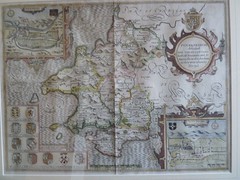
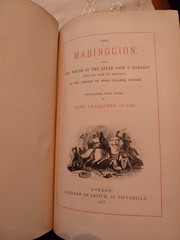
Our first visit to Pembrokeshire was over a wild, wet and windy weekend in November 1970. This should have been enough to deter us from subsequent visits, but there was something about the landscape, the air and the surrounding seas that captured our imagination. Since then we have returned many times, both by ourselves and later with our children. This land of enchantment, the Gwlad yr Hud of the Mabinogion, has been a source of magic and mystery since before the bluestones of Prescelly were taken from these sacred hills and re-erected on Salisbury Plain, in an early phase of Stonehenge development.


As well as its lonely and mysterious central mountains, Pembrokeshire has probably the finest cliff scenery in southern Britain, a number of dramatic Norman castles, fine churches and lovely river valleys. But it was to the remains of an earlier age that we first turned our attention. I refer to the numerous Neolithic tombs, or cromlechs, the magnificent iron age hill forts and cliff castles and the bronze age standing stones on lonely highways.

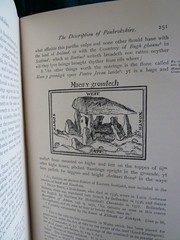
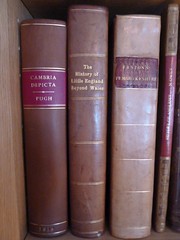
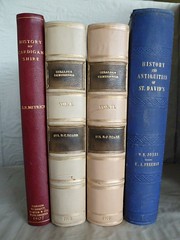
It was not long before visits to the Reference Section of Haverfordwest Public Library had fired our enthusiasm for searching out books on Pembrokeshire, its antiquities and its history. However it was on a visit to Chester that we acquired the first volumes in what was to become our Pembrokeshire collection - the first two volumes of George Owen's 'Description of Penbrokshire', published by the Cymroddorion Society. George Owen's description was first published in 1603 and contains a famous drawing of the magnificent chambered tomb of Pentre Ifan.


It was in these books that we found a reference to Richard Fenton's 'Historical Tour Through Pembrokeshire', so this became our next quest. Here I must introduce the first of three great booksellers of the old school, all of whom are sadly no longer with us. This is Stanley Crowe, whose shop in Bloomsbury Street became a Mecca for us on our visits to London. The rather cramped shop at street level was but the portal to the steep and narrow stairs that led to the extensive basement, filled with bulging shelves stacked with topographical works. Strategically placed buckets caught any water dripping from the ceiling. There was an inner sanctum in the basement for the really fine books, but this area was not for browsers. There were enough treasures in the rest of the basement, including a Welsh section. Sure enough, Stanley Crowe could offer two copies of Fenton, the 1810 first edition in half calf, or the buckram bound later second edition, at a quarter the price. We did what any true collector would, swallowed hard and committed a week's salary to the former.


Over subsequent visits we got to know Stanley Crowe and his assistant, Mary Booth, later Mary Hubbard, well. They helped us to add to the Pembrokeshire collection and to branch out into the neighbouring counties via such works as J E Lloyd's 'History of Carmarthenshire', Jones's 'Brecknock' and Meyrick's 'Cardiganshire'.

The second in my triumvirate is Tom Lloyd-Roberts, where over morning coffee, served by his mother in the elegant lounge of the Old Court House at Caerwys, near Mold, he would talk eloquently of all things Welsh, and in particular his greatest interest, Thomas Pennant, who embarked on his series of tours in the late 18th century from his home at Downing nearby. It was on one of these mornings that we added to our collection Edward Laws' 'History of Little England Beyond Wales' and Colt Hoare's magisterial translation of 'The Itinerary of Archbishop Baldwin Through Wales' by Giraldus de Barri, Gerald the Welshman, whose home was the lovely castle of Manorbier on the South Pembrokeshire coast.


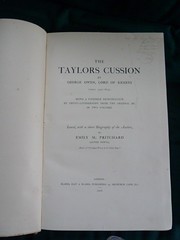
And finally, to Hay-on-Wye, the world's first book town, which in the early 1970's, under the leadership of Richard Booth, was, in my opinion, at its peak. Here, in the old Fire Station, we got to know Major Egginton, a distinguished gentleman, very much of the old school, who oversaw the topographical section of Richard Booth's bookshops. Here were treasures galore - county histories, tours and maps - and here we could add Lewis's "Topographical Dictionary of England and Wales", with the attractive county maps to the collection. We could also spend time handling books we could not afford and browse in the upstairs of the shop where treasures could be found in seemingly random stacks on tables and on the floor. I particularly remember a pile of copies of "Cardigan Priory in Olden Days", by Emily M Pritchard. Also a number of copies of George Owen's "The Taylor's Cussion", a collection of his miscellaneous jottings on Pembrokeshire and South Wales. It was this seemingly haphazard abundance that gave to Major Egginton's empire its magical quality. Find me a provincial bookshop now with such depth to it's holdings!


As time has passed, we have explored other counties and countries, rarely without seeking out the key books which encapsulate the spirit of the place; but the excitement of our early ventures as we attempted to form a Pembrokeshire collection remains an essential first step of our book collecting journey.


- Posted using BlogPress from my iPad